

Thin content will not be spared by Google in 2025. The June 2025 Core Update ranked sites with shallow content or those that made redundant points in its ranking algorithm. Google’s August 2025 Spam Update devalued keyword-rich pages and duplicate location-based content in its search engine results. In addition to that, Google now penalises low-quality pages and scrutinises AI-created content in its search engine algorithms. The challenge here is to identify and optimise thin content in order to enhance your SEO efforts. On the bright side, thin content optimisation can help improve rankings, increase user trust, and grow SEO in the long run.
What Is Thin Content?
If the content provided on any page has very little or no real value for the reader at all, then the content is called thin content. It means that the page lacks in-depth or original or useful information. This kind of content includes auto-generated content, duplicate content from other sites, minimal content on a page, or keyword stuffed content, which is created just for ranking purposes. As this content doesn’t really provide complete answers to a user’s question, it affects the user experience and search engine ranking as well. The trick is to make your content original and informative for users to get answers to their questions.
The Evolution of Thin Content in Google’s Algorithm
Thinning out content has been something that Google has been wary about for more than a decade now. With the release of the Panda update in 2011, websites relying on duplicated pages, stuffed keywords, and uninformative content were completely removed from the rankings. In one day, people realized that their thinning out content not only resulted in losing traffic but also credibility. Soon came the release of the Fred update in 2017 that focused on removing blogs and websites which had a lot of ads and had little relevance to actually helping their audience. These updates have clearly set a precedent: if you cannot help the user with your content, your site does not belong there at all.
How Thin Content Hurts Your SEO
Poor Search Engine Rankings
Low content can have a negative impact on your SEO because it does not provide your visitors with what they require. Google values useful, unique, and interesting pages, meaning that low content is bound to lose its position in the search results. For instance, a page for a particular product that is described in one line will probably be less successful than the competitor’s page, which is filled with product specifications and reviews.
Negative User Experience
Now think about finding yourself on a travel blog with just city names without any helpful advice, or finding a technical guide filled only with the obvious steps that you knew how to do anyway. Most people get irritated and go back. This raises bounce rates, and decreases the amount of time spent on your website. If your website tends to have low value content like this, then Google will consider it lower in value too.
Weakend Brand Authority
Low-quality content can actually sabotage the efforts you make to ensure your site performs well because such content impacts the way your audience and search engines view your brand. Websites with content that is not in-depth or unique can lower the level of knowledge associated with your brand, making people distrust your site. For instance, if a health website uses generic health tips copied from another source, it portrays your site as unreliable.
Decreased Conversion Rates
No website owner desires his/her audience to leave before doing something important on their site, but thin content hinders this. Content that does not elaborate much about the subject, duplicates the content used by competitor blogs, or AI-generated content without providing any valuable insight tends to disappoint viewers. For instance, an online course landing page that only contains module names, or a software product’s pricing page that does not include details about features, may not capture visitors’ interest.
Short-Term Focus
Creating instant success using poor quality content may be seen as a time-saver; however, in reality, it restricts further development. Poor content such as short product descriptions, short articles, or duplicated services pages may provide you with short-term traffic; however, it will not assist users in trusting your website or staying engaged. Search engines nowadays reward websites which provide truthful answers to their queries, so your poor content may ruin your ranking in the future. Creating informative and unique content will make users stay longer and visit your website repeatedly.
How to Identify Thin Content
1. Check Google Search Console
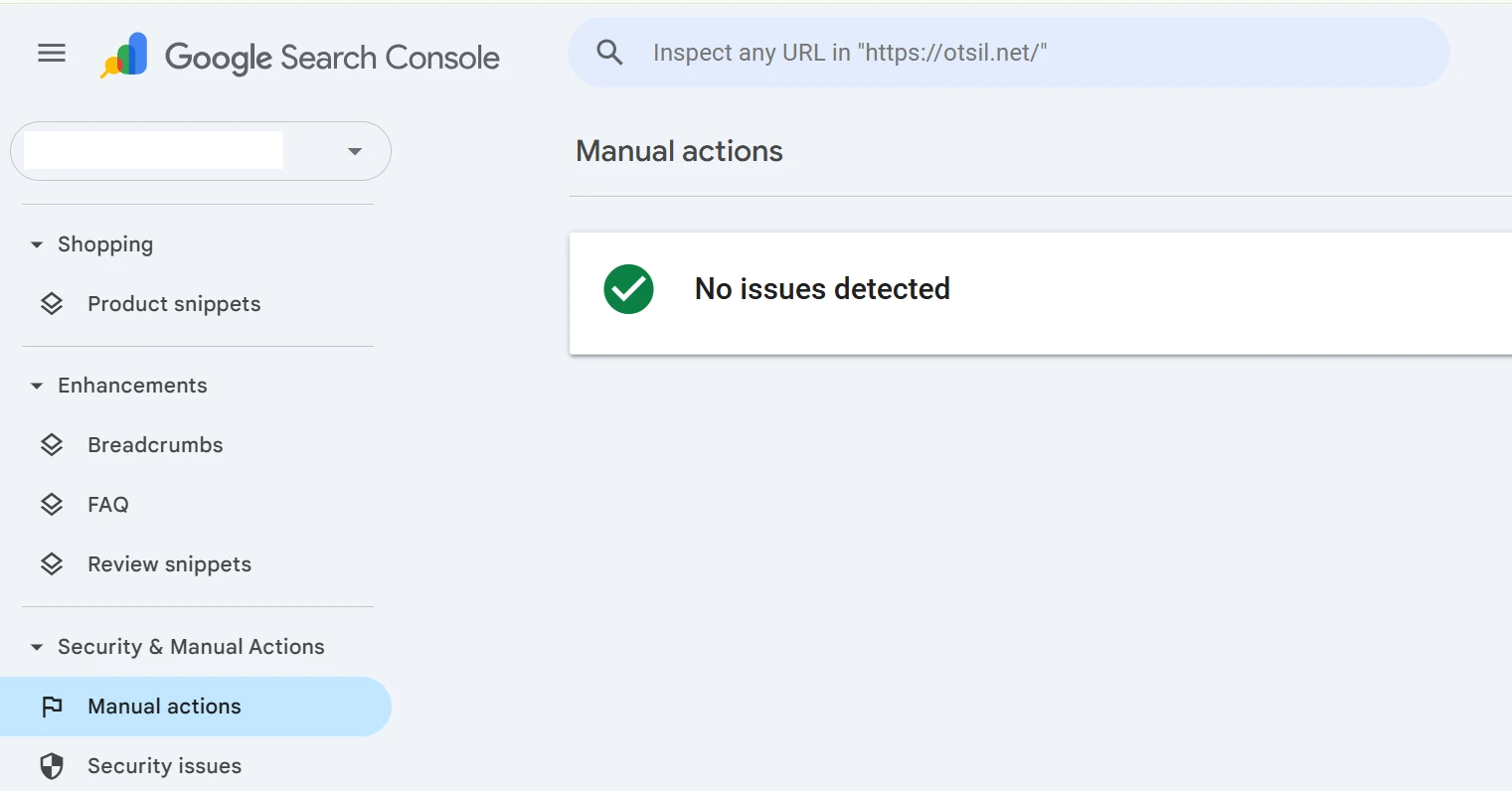
Step 1: Recognizing thin content entails using tools that you already have at hand. The first tool to check out would be the Search Console from Google. In the Search Console, there will be a tab named “Manual Actions,” which will notify you if any of your webpages have failed the quality standards of Google. Though the term “manual actions” may give you an impression that these are penalties manually applied by Google, the list displayed in the tab comprises mostly algorithmic penalties.
Step 2: Determining thin content begins with looking into Google Search Console. You should take a look at the Indexing tab, where you’ll find pages under “Discovered – Currently not indexed” and “Excluded” statuses, since thin content is the common reason behind this problem. Using the Coverage feature, you will be able to learn about what Google sees in your pages and why it doesn’t index them. Special attention should be given to the following tabs:
“Crawled – currently not indexed,”
“Duplicate without user-selected canonical,” and
“Duplicate, Google chose different canonical than user.”
Start with those pages which have traffic and backlinks.
Step 3: First of all, try to analyze those pages that have a small number of page impressions or a high bounce rate. Such pages are often those that do not attract visitors’ attention. It is necessary to check whether the content of such pages is brief, repetitive, or does not give answers to the users’ questions. Those pages that are quickly abandoned or left by visitors definitely lack depth and practical information.
2. Run a Site Audit and Fix Technical Issues
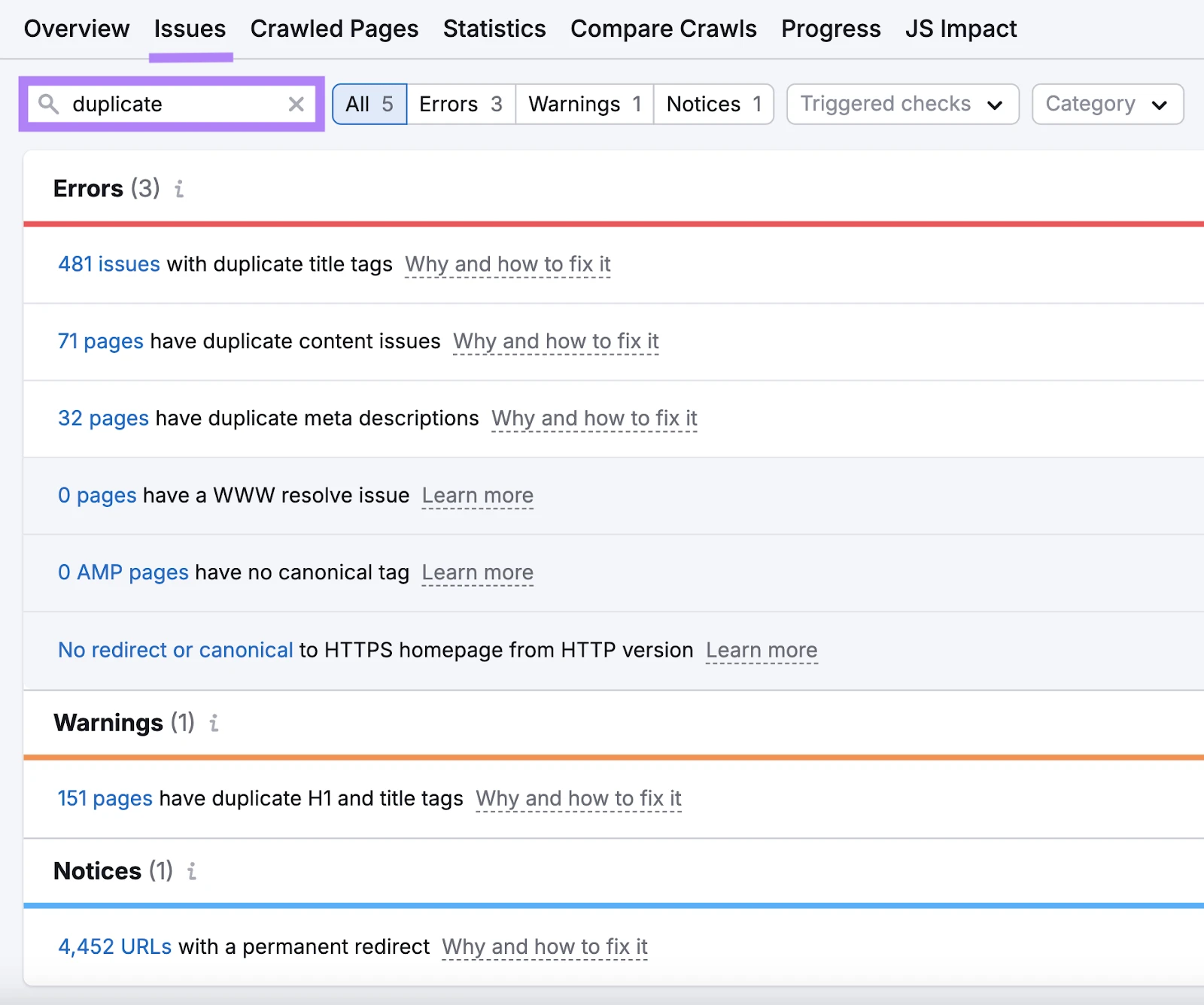
You may begin with using online tools such as SEMrush, Ahrefs, or Screaming Frog. These will scan your website pages and show you which pages have fewer words, duplicated content, or less user engagement. Secondly, go through all your titles, descriptions, and headings on different pages to make sure that they correctly represent the purpose of the page. Through this process, you will be able to easily identify pages that need more information, more uniqueness, or more focus.
3. Read Through Your Webpages
In order to find thin content, ask yourself what do your users actually get on this page? The ideal page will define and elaborate on the topic itself, its importance, and how it should be used or implemented. When there are some questions that remain unclear, you may assume that you have thin content here. Such an assessment cannot be fast because counting words does not help much here — short pages can be highly informative and useful. Pages should be checked manually for their incompleteness and brevity, making sure all the pages add real value for users.