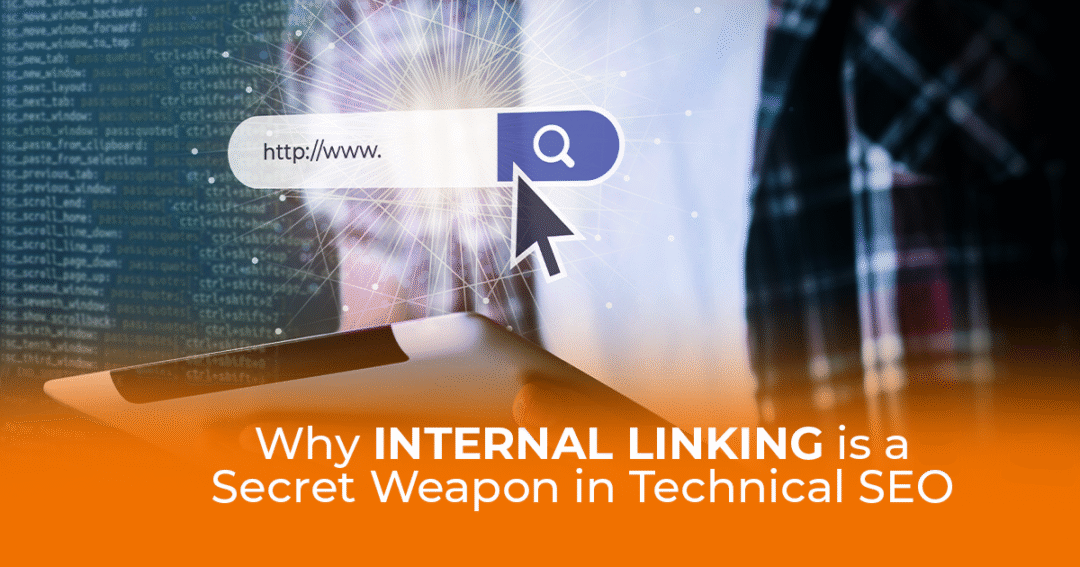
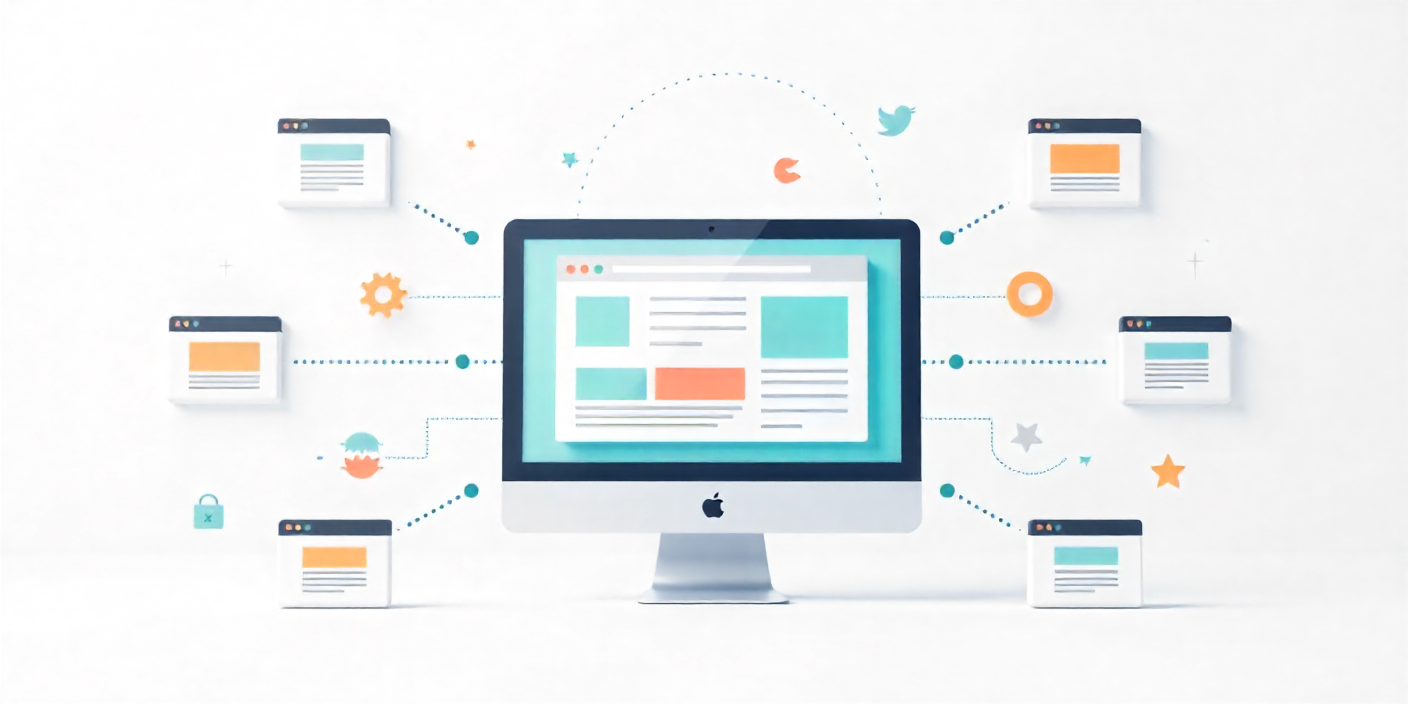
Internal Linking is one of the easiest yet strongest methods used for SEO purposes. Internal linking simply involves linking one web page to another with click-able links. Imagine that you have a city made up of buildings, and each building represents a page on your website; these pages need to be linked together just like you would link buildings within a city with roads.
What is Internal Linking in SEO?
In short terms, Internal Linking is the linking of one page within your website to another page on that same website. In this case, if there is a blog post about “CNC Machines” and “Types of CNC Milling Machines,” linking them enables readers to know more and stay engaged.
The search engine (Google) will also follow those internal links to index and crawl new pages. Without internal linking, it will be just like a home that has no road going to it, and search engines can’t access it easily.
Example:
- In an e-commerce website, an article under the “How to choose the right running shoes” blog page can be linked to a “running shoes” product page.
- In a blog, an article on “On-Page SEO” can be linked to another article on “Best Meta Tags Practices.”
Making such a chain that
- Will help Google find and crawl your unseen pages.
- Will improve user experience through recommended pages.
A page without internal links is referred to as an orphan page where search engines cannot access the page, and neither will your visitors.
Why Internal Linking Matters in Technical SEO
The importance of Internal Linking in technical SEO is a well-kept secret since it will help you build the spine of your website. Most website owners focus on acquiring backlinks, optimizing for speed and design, but never consider the fact that building internal links helps in building a solid foundation of their websites.
Here’s how:
Improves Crawlability:
Google makes use of “crawlers” (robots). Internal links assist the crawling process by enabling bots to travel from one page to another. The pages which do not have any internal links will be skipped by the crawler.
Link Equity Distribution (Link Juice):
The linking of two pages allows the passing on of SEO power from a highly authoritative page of your site to another page.
Increases Engagement of the User:
When you have an internal link to “Keyword Research”, you can make it take your users to “SEO tools for Keyword research.” This enables visitors to read more articles and stay on your site longer.
Organization of Content:
It is easier to organize related pages through linking in order to show the hierarchy of your web pages to search engines as well as to readers.
Best Practices for Effective Internal Linking
Not all internal links are helpful. Random or irrelevant links can confuse both readers and Google. Here are some practical tips:
Use Descriptive Anchor Text
Instead of using vague text such as “Click Here,” use descriptive anchor text that explains what is being linked. For example: “Check out our Guide to Core Web Vitals”
Links to Relevant Pages Only
Ensure that the linked page has relevance in some way to what you are saying. When discussing “Page Speed,” for example, it’s better to link to a piece about “Image Compression” than to a piece about “About Us.”
Avoid Over-linking
Over-linking appears to be spammy and irrelevant. Limit internal linking to 2-5 links for a blog of 500-700 words.
Use Proper Site Architecture
Ensure your site has good site architecture so that all important pages can be accessed within 1-2 clicks from the homepage. Internal links show site architecture.
Update Older Blogs With New Links
Whenever a new blog is written, update the older blogs by adding some links where necessary. This ensures Google re-crawls the older pieces.
Example of Internal Linking
Suppose you own a travel blog website and have the following pages published in your site:
- “Best Beaches in Goa”
- “Top Adventure Sports in Goa”
- “Goa Food Guide”
Linking these three articles will make it an “Goa Travel” cluster and helps Google know that your website is an expert in that subject. In the same way, the e-commerce website such as Amazon is an expert in this field and a single product page links related products to frequently purchased and customer reviews.
The 3-2-1 Internal Linking Strategy
Internal linking may become somewhat perplexing in case you do not know how many links to create and where to link them. This is why I recommend adopting the simple 3-2-1 Internal Linking approach. The approach helps achieve the right balance between relevance and SEO value.
Here’s how it goes:
3 Links to Related Blog Posts
Anytime you post an article on a new blog, make sure that you use three hyperlinks to other blogs on your website which are relevant to the main topic of the blog.
Example: When you’re posting about “How to Improve Page Speed,” you can include links such as:
- “Illustration Optimization for SEO”
- “What are Core Web Vitals?”
- “Browser Caching”
2 Links to Service or Money Pages
It’s not only about education; blogs can be used for conversions too. Make sure to add at least two links on your service/product/monetization pages which are crucial for your business.
Example: In case your blog post is titled “On-Page SEO Basics,” you may link to:
- Your SEO Services page
- A Case Study page with your successful results
With this approach, people interested in making a conversion will be able to go straight to your business pages.
1 Link to a Cornerstone Page or Homepage
The final step is to include a single link pointing to either your homepage or your cornerstone content. These are some of the most valuable and extensive content on your website.
- For example, if you have a travel blog, then your “Ultimate Goa Travel Guide” can be your cornerstone content. All the Goan content must point to it.
This will form a hub and spoke structure, where the cornerstone acts as the hub and all the blogs as the spokes.
Why the 3-2-1 Rule Works
- It strikes an ideal balance between its internal linking (not too many nor too little).
- It distributes link equity (SEO power) to blogs, services, and core content strategically.
- It increases crawlability by Google.
- It ensures that the user follows the path from “learning” to “exploring” to “conversion.”
Conclusion
In other words, Internal Linking is not only some minor SEO technique but rather a hidden power that increases the technical strength of your site. This tool enables search engines to find pages, spreads SEO power throughout your site, and encourages users to spend more time on it. Implementing easy-to-use recommendations, like using descriptive anchor text, linking relevant pages, and removing outdated content, one may create an integrated network out of your site. Roads make a city accessible, and internal links make your website strong, intelligent, and recognizable.
Time to Improve Your Pages’ SEO Rating? Start creating smart internal links today and see how fast your pages will be found, ranked, and viewed. Looking for an efficient strategy of Internal Linking?
Contact us right away!