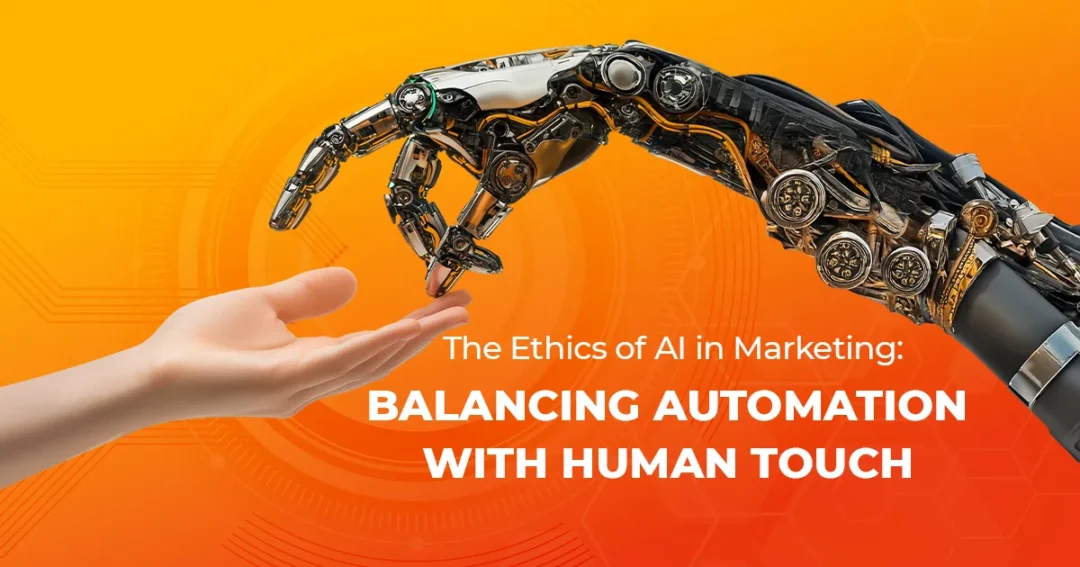
Being engaged in a constantly changing field such as marketing, one gets the feeling that automation is a kind of superpower. This applies to all stages of the process, namely personalization, optimization and scaling of actions into something bigger. At the same time, being faced with the presence of AI technology and its integration into every single campaign and strategy, the question inevitably arises: Where will we stop in using AI technology in marketing?
With constant advancements in technology and its abilities exceeding our first impressions dramatically, it becomes crucial to determine clearly what it should be used for. Ethics has become a very important issue both for companies and for their customers. Thus, the ethical use of AI in marketing may become a trust-building activity.
The Need for Ethical Marketing with AI
Abuse of Data: Incidents of privacy violation and the sale of personal data have been brought to light again and again, thus destroying customer confidence in many different brands.
Bias: As we all know, AI is trained on the basis of data. So if the data is biased in nature, AI will simply continue and magnify the bias and treat people unfairly
Lack of Transparency: If consumers do not know what data is being used against them and why they are being served specific advertisements, it leads to lack of interest in the platform. Thus, transparency in marketing is key.
Automation v/s Human Touch in Marketing
- Human Emotions: Though it is possible for AI to recognize and react to human emotions, it does not experience them the way humans do. Real empathy, which involves forming profound connections, is achieved only through human interactions.
- Creativity and Spontaneity: Refinement of ideas using AI is a common practice, but that sudden moment of revelation, which happens completely through intuition and spontaneity, is unique to humans.
- Knowledge of Context and Nuances: People in one part of the world may be completely different from people in another part of the world. Understanding the nuances and knowing about the differences in behavior requires experience.
Building Consumer Trust in AI
- Transparency on AI Use: Be clear about the use of AI within the business process. In case a consumer interacts with a chatbot, make sure to disclose that information and tell him about the process.
- Disclaimers: A simple disclaimer like (Can this data be used for our internal training) before using and treating the information with respect can go a long way in making the customer feel valued.
- Option of Opting Out: On some occasions, consumers are made to accept the conditions because there is no option of opting out. It can also result in the loss of the consumers.
Best Practices for Ethical AI Use
- Regular Audits: It will be good to audit your AI system, its biases, privacy risks, and other unforeseen results.
- Inclusive Data Sets: Diversify the training data used by your AI. You will make your system more inclusive to the users.
- Human in the Loop Systems: Your AI system must have human involvement in all processes and must never run autonomously. The system becomes humanised and efficient.
- Security Is Paramount: Have cybersecurity in place such that there are no data breaches.
Conclusion
The emergence of AI in all its forms is proof that this is not a trend but a paradigm shift in our way of consuming and interacting with the information around us. But super efficiency comes hand-in-hand with lots of responsibility. The responsible use of AI is no longer a choice, it is an obligation for any company since, ultimately, you have people as your customers.