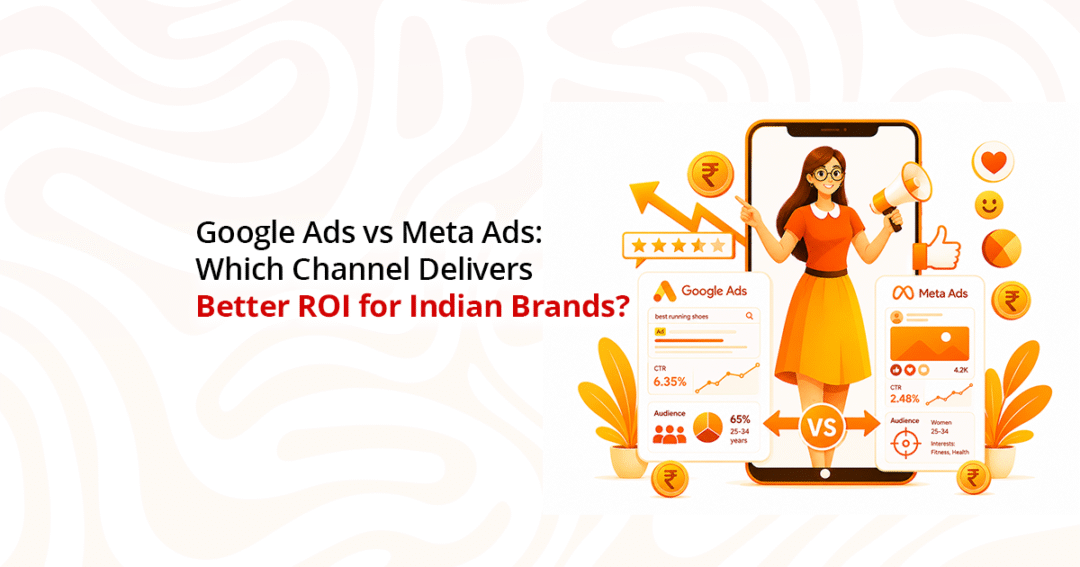
If you’ve ever run digital advertising, you’ve probably asked this question:
Should I invest in Google Ads or Meta Ads?
It’s one of the most common debates in performance marketing. The problem is that the answer is rarely as simple as choosing one over the other.
Both platforms are powerful. Both can drive results. But they work in very different ways.
Understanding those differences is the key to getting the most out of your marketing budget.
The Biggest Difference: Intent vs Interest
The easiest way to understand Google Ads and Meta Ads is by looking at user behaviour.
Google Ads captures existing demand.
When someone searches for “best CRM software for small businesses” or “digital marketing agency in Mumbai“, they already have a need. They’re actively looking for a solution.
Your ad simply helps them find it.
Meta Ads work differently.
People aren’t scrolling Instagram or Facebook looking for products or services. They’re browsing content, catching up with friends, or watching videos.
Your ad appears in front of them based on their interests, behaviour, and demographics. In other words, Meta helps create demand rather than capture it.
Neither approach is better. They simply serve different purposes.
When Google Ads Works Best
Google Ads shine when users already know what they want.
Because search intent is high, conversion rates are often stronger than most social media campaigns.
Google is particularly effective for:
- B2B services
- SaaS products
- Healthcare businesses
- Local service providers
- Real estate companies
- High intent e-commerce searches
For example, someone searching “tax consultant near me” is much closer to taking action than someone casually scrolling Instagram.
Google also offers powerful formats beyond Search Ads.
YouTube helps brands build awareness through video, while Google Shopping allows e-commerce businesses to showcase products directly within search results.
Challenges with Google Ads
Google isn’t perfect.
If you’re launching a completely new product or category, there may not be enough search volume to generate meaningful traffic.
Competition can also drive costs up significantly. Industries such as real estate, insurance, and SaaS often see some of the highest CPCs in India.
In addition, Google’s ad formats can feel restrictive compared to the visual storytelling opportunities available on social media.
When Meta Ads Works Best
Meta Ads excel at reaching people before they’re actively searching.
With Facebook and Instagram, brands can target users based on age, location, interests, behaviours, life events, and more.
This makes Meta incredibly effective for:
- D2C brands
- Fashion and lifestyle businesses
- Beauty brands
- Food and beverage companies
- Home décor brands
- Product launches
Meta’s biggest strength is creative storytelling.
A strong Reel, carousel, or video ad can build interest and emotional connection long before a customer is ready to buy.
For many brands, that’s where the buying journey begins.
Meta’s India Advantage
One feature that stands out in the Indian market is WhatsApp integration.
Click-to-WhatsApp campaigns often generate leads at a lower cost than traditional landing pages.
Many Indian consumers are simply more comfortable starting a conversation on WhatsApp than filling out a lengthy enquiry form.
Challenges with Meta Ads
The biggest challenge with Meta is intent.
People aren’t actively searching for solutions when they see your ad. You’re interrupting their browsing experience.
As a result, conversion rates are usually lower than those for Google Search campaigns.
Creative fatigue is another challenge. Users see social ads repeatedly, which means campaigns require regular creative refreshes to maintain performance.
Google Ads vs Meta Ads: Which Delivers Better ROI?
The honest answer? It depends on what you’re trying to achieve.
If your goal is to generate enquiries, Google Ads is often the stronger choice. The people searching for a service or product are already looking for a solution. They’re usually much closer to making a decision.
Meta Ads work differently. They’re great for getting your brand in front of new audiences. If you’re launching a product, building awareness, or creating interest, Meta gives you the space to tell your story through visuals and content.
In most cases, it isn’t about choosing one platform over the other.
They play different roles in the customer journey.
Google helps you connect with people who are actively searching.
Meta helps you reach people before they start searching.
Why the Best Brands Use Both
Most successful brands don’t choose between Google and Meta.
They use both as part of a connected strategy.
Here’s what that usually looks like:
First, Meta Ads introduce the brand to new audiences through engaging content.
Next, interested users search for the brand or product on Google.
Google Ads then capture that demand when people are ready to learn more or make a purchase.
Finally, Meta retargeting helps bring back visitors who didn’t convert the first time.
This approach creates a full-funnel marketing system in which each platform supports the others.
In many cases, the combined strategy produces a better ROI than relying on either platform alone.
How Should You Allocate Your Budget?
While every business is different, some general guidelines can help.
E-commerce Brands
- 40 to 50% Google Search and Shopping
- 35 to 45% Meta Ads
- Remaining budget for retargeting
B2B Businesses
- 50 to 60% Google Search
- 25 to 35% Meta or LinkedIn
- Remaining budget for remarketing
D2C Brands
- 50 to 60% Meta Ads
- 30 to 40% Google Search and Shopping
- Small allocation for YouTube
Local Businesses
- 70 to 80% Google Search and Maps
- 20 to 30% Meta for awareness
Final Verdict
If your goal is to reach people who are already looking for a solution, Google Ads will usually deliver a stronger, conversion-focused ROI.
If your goal is to build awareness, generate interest, and introduce your brand to new audiences, Meta Ads is often the better choice.
But the real winner isn’t Google or Meta.
It’s the combination of both.
A successful digital marketing agency in Mumbai understands that the strongest marketing strategies use Meta to create demand and Google to capture it. Together, they build a customer journey that drives awareness, consideration, and conversions more effectively than either platform can on its own.